

Welcome back to the Spanish Spoken Lessons blog.
Here you’ll find all the information we post on social media, in a more organized format. Our goal is to help students at any level avoid common pitfalls, gain interesting insights and improve their grasp on Spanish grammar.
So let’s get started.


MÚLTIPLES SIGNIFICADOS
Extraño
Some words in Spanish present a challenge for students because they have multiple meanings in English.
Extraño is one of them. Do you know all the potential translations for it?

Extraño is an adjective that describes situations or things unfamiliar to us in our day-to-day experience.
There are a few potential translations for this term:
strange
odd
rare
foreign


EJEMPLO:
Mi hermano está actuando de forma muy extraña últimamente.
My brother is acting in a very strange manner lately.

EJEMPLO:
Me parece muy extraño que tengamos nieve en este momento del año.
It seems very odd to me that we are having snow at this time of the year.

EJEMPLO:
Tu abuelo colecciona libros y artefactos raros pero fascinantes.
Your grandfather collects rare but fascinating books and artifacts.

EJEMPLO:
Cuando el fotógrafo visitó a esa tribu presenció un ritual extraño.
When the photographer visited that tribe he witnessed a strange ritual.


EXPLICACIONES BREVES
Muy, mucho, muchos
Algunos estudiantes de español tienen dificultades para usar muy, mucho y muchos correctamente.
¿Sabes en qué casos debes usar cada una de estas palabras?

Muy: se usa con adjetivos y por lo tanto no cambia con el género o número de la palabra que antecede.
Mi prima es muy optimista.
My cousin is very optimistic.Los niños son muy ruidosos.
The kids are very noisy.

Mucho, mucha: se usan con conceptos que no son contables y deben coincidir con esos sustantivos en género y número.
Siempre compras mucha ropa.
You always buy a lot of clothes.Perdí mucho dinero en Las Vegas.
I lost a lot of money in Vegas.

Muchos, muchas: se usan con conceptos que pueden ser contados y también deben coincidir en género y número con el sustantivo.
Tenemos muchos amigos.
We have many friends.Tus sobrinos ven muchas películas.
Your nephews watch many movies.

EJEMPLO:
Estamos muy ocupados porque tenemos mucho trabajo que hacer.
We are very busy because we have a lot of work to do.

EJEMPLO:
Tu abuela está muy enferma y toma muchas pastillas diferentes.
Your grandmother is very sick and takes a lot of different pills.

EJEMPLO:
Él es muy disciplinado, hace mucho ejercicio y corre muchos maratones.
He is very disciplined, works out a lot and runs many marathons.


PUNTOS DE GRAMÁTICA
Estar vs ser pt. 1
Un problema común para algunos estudiantes de español es entender la diferencia entre los verbos estar y ser, ya que ambos son equivalentes del verbo ‘to be’.
¿Sabes en qué situaciones y casos específicos debemos usarlos? Aquí te explicamos su uso correcto.

Estar vs ser:
Es muy común señalar que se debe usar el verbo estar si hablamos de condiciones temporales, y ser al hablar de características permanentes.
Aunque esta distinción es útil como una aproximación básica, NO ES SUFICIENTE para explicar todos los usos de estos verbos.
He aquí otra alternativa. ↓
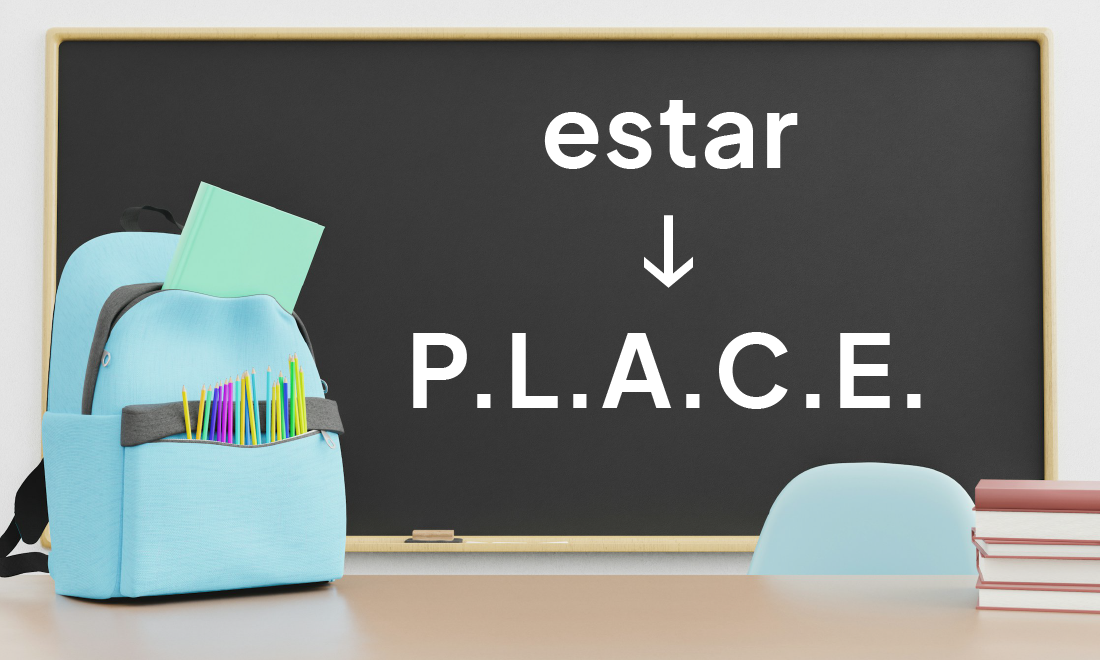
Verbo estar → P.L.A.C.E.
Esta clave nos ayuda a enumerar los usos más comunes de este verbo, incluyendo lugares, ubicaciones, acciones, condiciones y emociones.
P = place
L = location
A = action
C = condition
E = emotion
Ellos están en la oficina.
They are in the office.Lima está en Perú.
Lima is in Peru.Estamos estudiando.
We are studying.Ella está enferma.
She is sick.

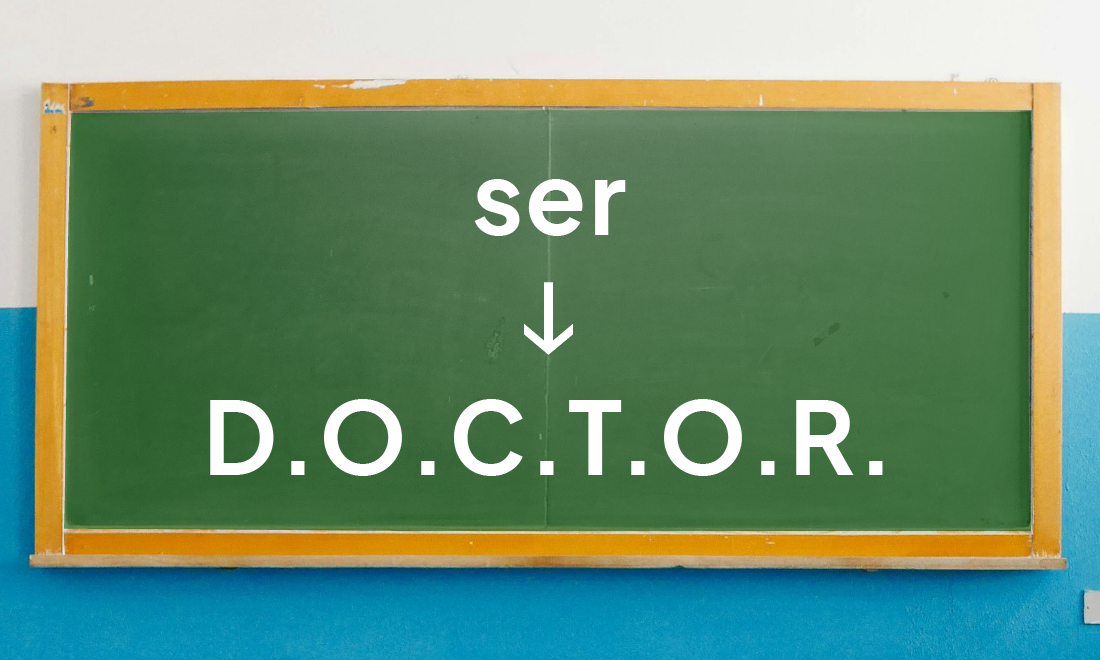
Verbo ser → D.O.C.T.O.R.
Esta clave es útil para recordar que este verbo describe fechas, tiempo, origen, relaciones personales, etc.
D = date
O = occupation
C = characteristic
T = time
O = origin
R = relationship
Hoy es 18 de abril.
Today is April 18th.Eres diseñadora gráfica.
You are a graphic designer.Sois muy amables.
You (plural) is very polite.Ellos son de Colombia.
They are from Colombia.

TRADUCE LAS SIGUIENTES ORACIONES USANDO ESTOS VERBOS.

My friends are relaxing at the beach right now because they are on vacation.

We are stressed out at work because our newest client is very demanding and is constantly emailing us.
¡GRACIAS POR LEER!
Regresa cada lunes y encontrarás más información interesante sobre el español.